
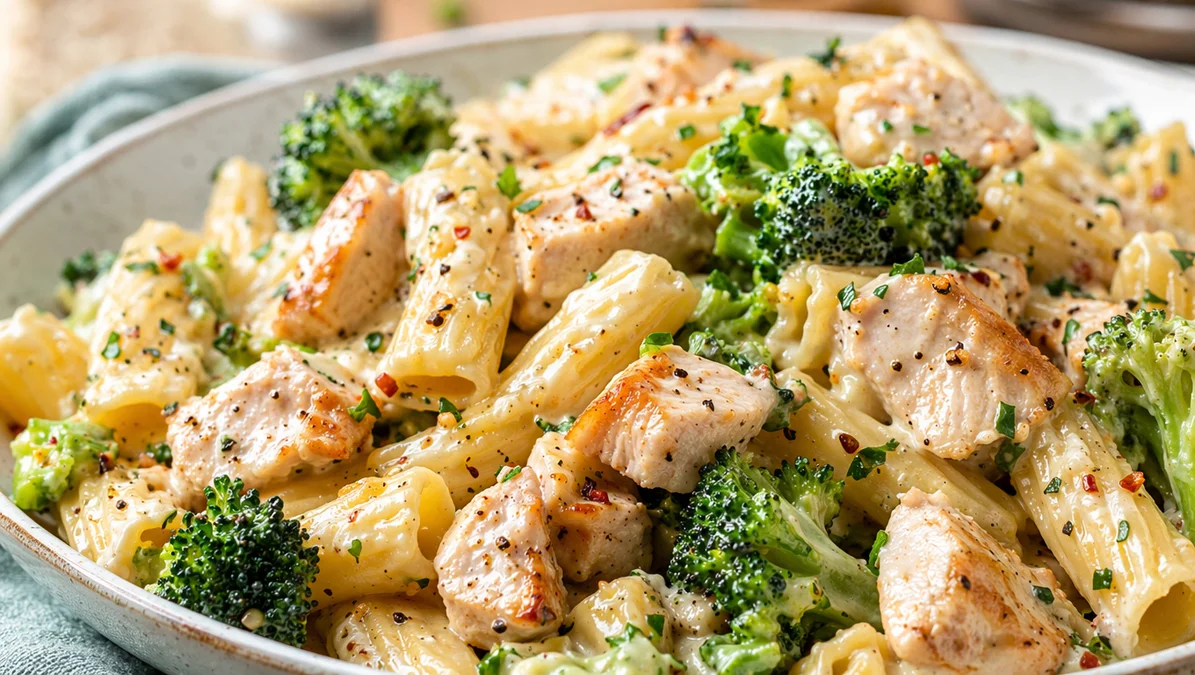
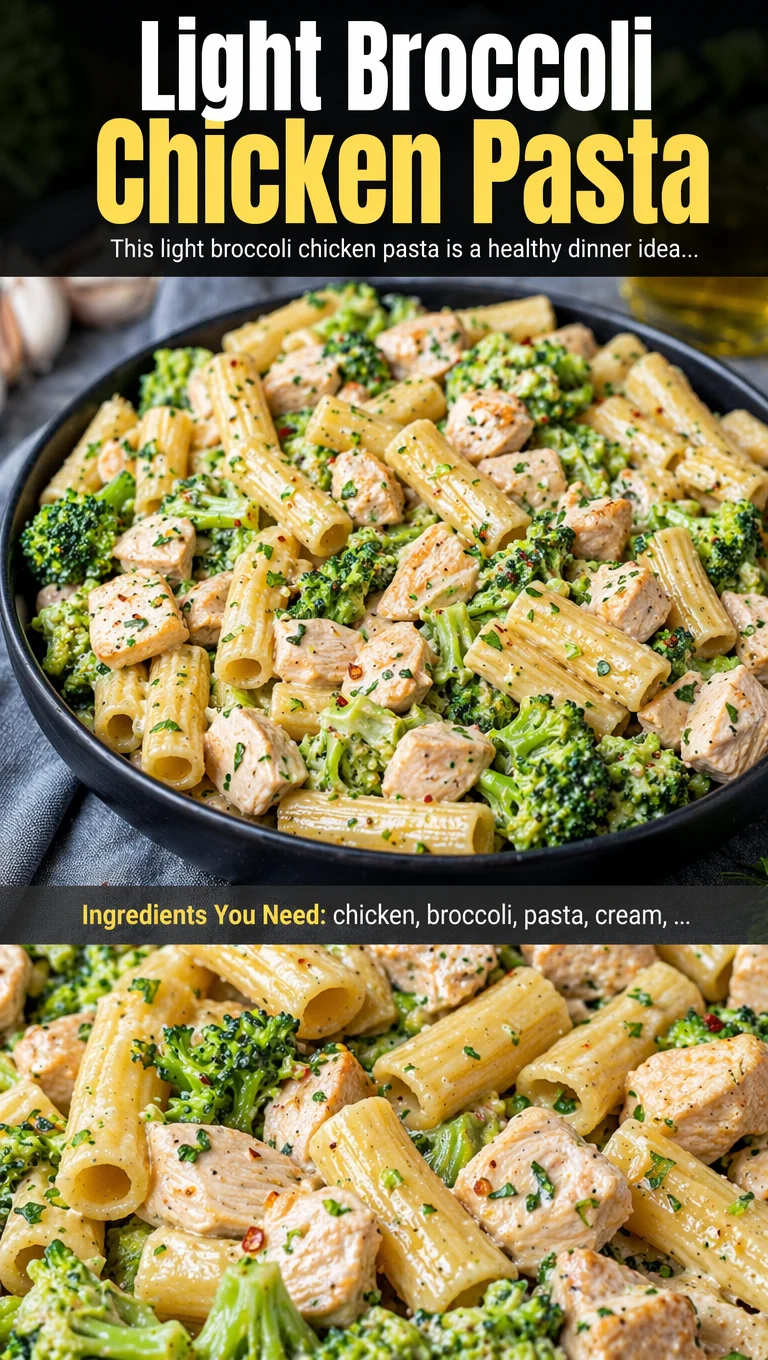
This light broccoli chicken pasta is a healthy dinner idea that doesn't skimp on flavor. Ready in 30 minutes with tender chicken, fresh broccoli, and a silky cream sauce.
Ingredients
Instructions
Bring a large pot of generously salted water to a rolling boil. The water should taste like the sea—this is the only chance to season the pasta from within. Add your pasta and cook according to package directions until al dente, usually 8-10 minutes. Al dente means the pasta is tender but still has a slight firmness at the center when bitten. This texture holds up better when tossed with the sauce. Reserve about 1 cup of the starchy pasta water before draining; the starch helps thicken and emulsify the sauce later. Drain the pasta and set aside, but do not rinse—rinsing removes the starch that helps the sauce cling to the noodles.
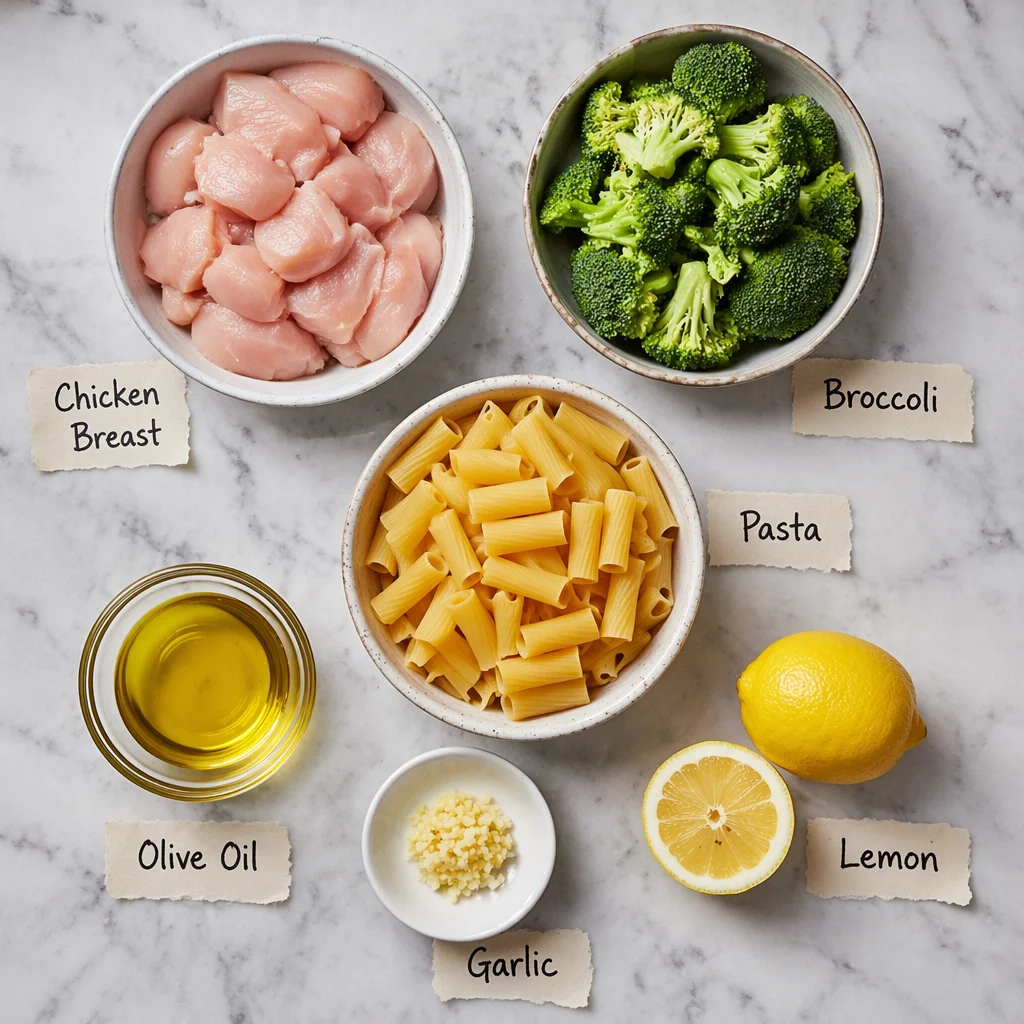
While the pasta cooks, prepare the chicken and broccoli. Slice the chicken breasts horizontally into thin cutlets, about 1/2-inch thick, then cut those into bite-sized strips. This ensures quick, even cooking. Season the chicken lightly with a pinch of salt and pepper. If using fresh broccoli, cut the florets into small, uniform pieces so they cook evenly. If using frozen broccoli, thaw it completely and pat dry with paper towels to avoid excess water in the pan.
Heat 1 tablespoon of olive oil in a large skillet over medium-high heat. Once the oil shimmers, add the chicken strips in a single layer—do not overcrowd the pan; cook in batches if needed. Sear the chicken without moving it for 3-4 minutes until the underside is golden brown and releases easily from the pan. Flip and cook another 2-3 minutes until the chicken is cooked through (internal temperature 165°F/74°C). The chicken should be juicy and lightly browned on the outside. Transfer the cooked chicken to a plate and set aside.
In the same skillet, reduce heat to medium and add the remaining 1 tablespoon of olive oil. Add the broccoli florets and cook, stirring occasionally, for 3-4 minutes until bright green and crisp-tender. You want the broccoli to retain a slight crunch—overcooking makes it mushy and dull in color. If the pan seems dry, add a splash of the reserved pasta water to create steam. Push the broccoli to one side of the pan.
Add the minced garlic to the empty side of the pan and sauté for 30 seconds until fragrant. Garlic burns quickly, so keep it moving. Then pour in the heavy cream, stirring to combine with the broccoli and garlic. Bring the cream to a gentle simmer—do not boil vigorously, or it may curdle. Let it cook for 2 minutes, stirring occasionally, until it thickens slightly and coats the back of a spoon.
Reduce the heat to low and sprinkle in the grated Parmesan cheese, stirring constantly until the cheese melts into the sauce. The sauce will become smooth and velvety. Season with salt, black pepper, and red pepper flakes if using. Taste and adjust seasoning—remember the pasta water is salty, so go easy on additional salt. For a bright finish, stir in the lemon juice. The acidity cuts through the richness of the cream and cheese, balancing the dish.
Return the cooked chicken and drained pasta to the skillet. Toss everything together with tongs or a wooden spoon until the pasta and chicken are evenly coated in the sauce. If the sauce seems too thick, add reserved pasta water a tablespoon at a time until it reaches your desired consistency. The starchy water helps the sauce cling to the pasta without becoming greasy. Serve immediately, garnished with extra Parmesan and a sprinkle of black pepper if desired.
For best results
- Perfectly cooked pasta: Always cook pasta in a large amount of salted water—at least 4 quarts per pound. The salt seasons the pasta from within. Remember to reserve pasta water before draining; it's a secret weapon for adjusting sauce consistency and adding body without extra fat. If you forget, you can use a splash of starchy water from boiling potatoes or simply use plain water mixed with a pinch of cornstarch.
- Chicken prep for juiciness: Slicing chicken breasts horizontally into thin cutlets ensures they cook quickly and evenly without drying out. If you have time, brine the chicken in a simple saltwater solution (1 tablespoon salt per cup of water) for 15-30 minutes before cooking. This locks in moisture and seasons the meat throughout. Pat the chicken dry before searing to get a nice golden crust.
- Broccoli texture: For the best texture, blanch the broccoli in boiling salted water for 1-2 minutes before adding to the skillet. This sets the bright green color and softens it slightly while preserving crunch. Alternatively, steam the broccoli in the microwave with a tablespoon of water for 2 minutes. Avoid overcooking—nobody likes mushy broccoli.
- Sauce stability: Heavy cream is the most stable option for a creamy sauce, as it resists curdling at higher temperatures. If you prefer a lighter sauce, use half-and-half but keep the heat low and avoid boiling. For a dairy-free version, full-fat coconut milk works surprisingly well, though it will add a subtle coconut flavor. Stir in a teaspoon of cornstarch mixed with water if you need extra thickening.
- Make it a one-pan meal: To minimize cleanup, cook the pasta directly in the skillet after searing the chicken. Add enough water to cover the pasta, bring to a boil, and cook until al dente, stirring occasionally. The pasta absorbs the chicken and garlic flavors. Then add the cream and cheese directly—no draining needed. Adjust liquid as necessary.
Variations
- High-protein twist: Swap the regular pasta for chickpea or lentil pasta to boost protein and fiber. These alternatives cook slightly faster, so check the package timing. You can also add a can of drained and rinsed cannellini beans along with the broccoli for extra protein and creaminess. The beans blend into the sauce beautifully.
- Vegetarian version: Omit the chicken and double the broccoli, adding other vegetables like sliced bell peppers, zucchini, or cherry tomatoes. For a protein boost, toss in some sautéed mushrooms or a handful of frozen peas at the end. You can also add a can of chickpeas or white beans for heartiness.
- Spicy arrabbiata style: Add 1/2 teaspoon of red pepper flakes with the garlic and substitute half the cream with tomato sauce or crushed tomatoes. This creates a creamy tomato sauce with a kick. Garnish with fresh basil and extra Parmesan. The acidity of tomatoes balances the richness of the cream, making it a lighter-feeling option.
- Lemon herb version: Increase the lemon juice to 2 tablespoons and add 1 tablespoon of fresh chopped parsley and 1 teaspoon of fresh thyme leaves along with the garlic. The herbs brighten the dish and complement the chicken beautifully. Serve with a lemon wedge for squeezing at the table.
- Gluten-free adaptation: Use your favorite gluten-free pasta, such as rice, corn, or quinoa pasta. Be careful not to overcook, as gluten-free pasta can become mushy easily. Rinse it briefly after draining to remove excess starch, and toss with a little olive oil to prevent sticking. The sauce works perfectly as is.
Nutrition
- Calories425 kcal
- Total Fat22g
- Saturated Fat12g
- Cholesterol95mg
- Sodium480mg
- Total Carbohydrates32g
- Dietary Fiber3g
- Sugars4g
- Protein28g