
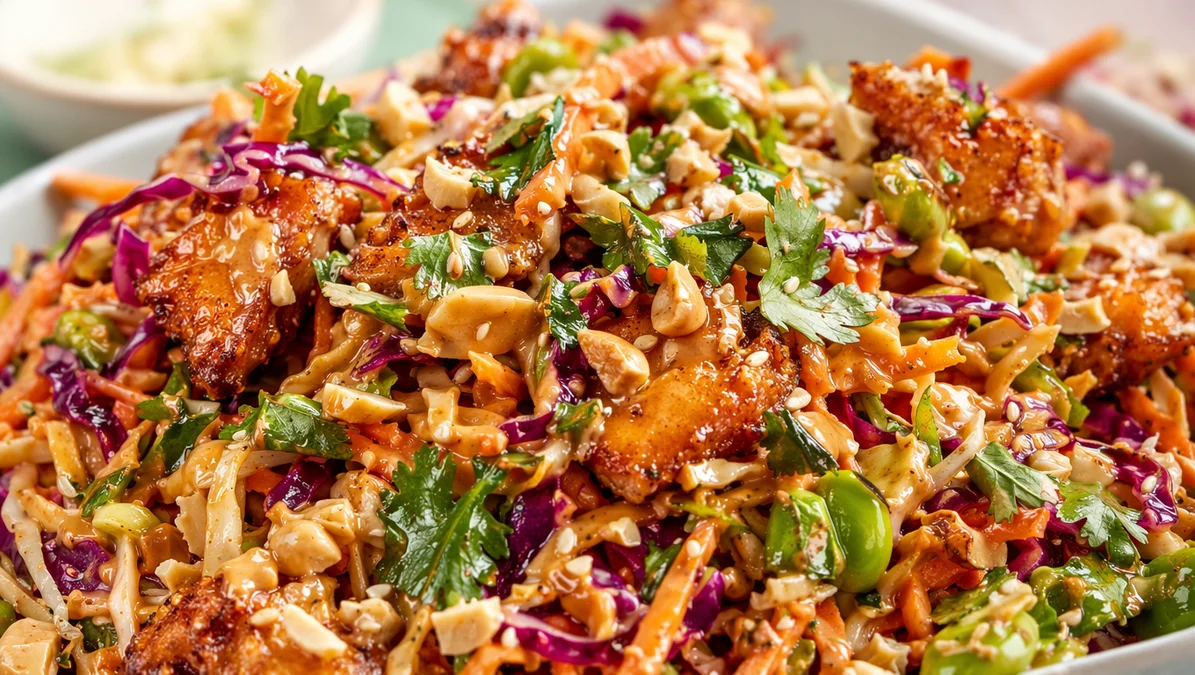
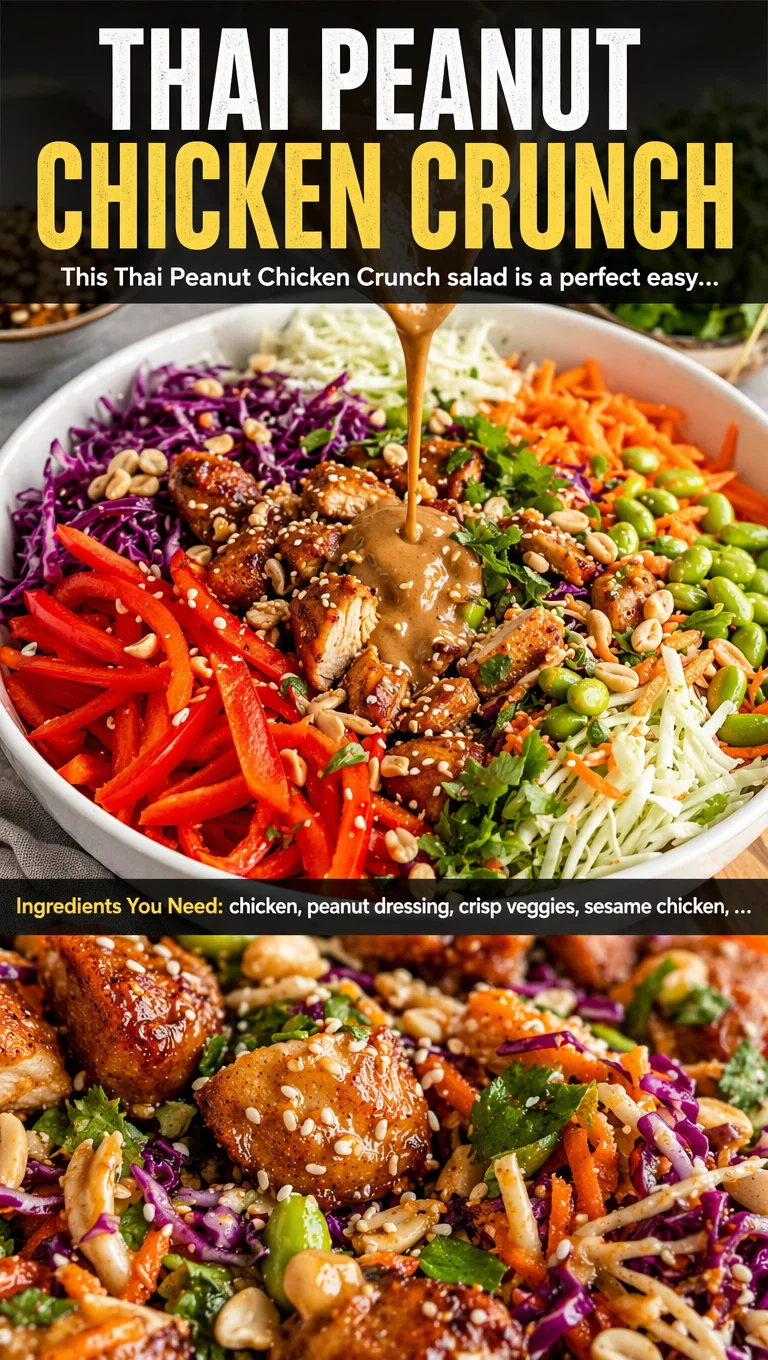
This Thai Peanut Chicken Crunch salad is a quick 30-minute high-protein dinner with crispy sesame chicken, fresh veggies, and a creamy homemade peanut dressing. Perfect for busy weeknights!
Ingredients
Instructions
Gather all your ingredients. This step is crucial for a smooth cooking process. For the chicken, choose boneless skinless breasts or thighs—thighs are more forgiving and stay juicier. Cut the chicken into uniform bite-sized pieces (about 1-inch cubes) so they cook evenly. Pat them dry with paper towels; moisture is the enemy of crispiness. Set up a breading station: one bowl with cornstarch, one with beaten eggs, and a third with panko breadcrumbs mixed with sesame seeds, salt, and pepper. The cornstarch creates a dry surface that helps the egg wash adhere, while panko gives that extra-crunchy texture. Sesame seeds add nutty flavor and visual appeal.
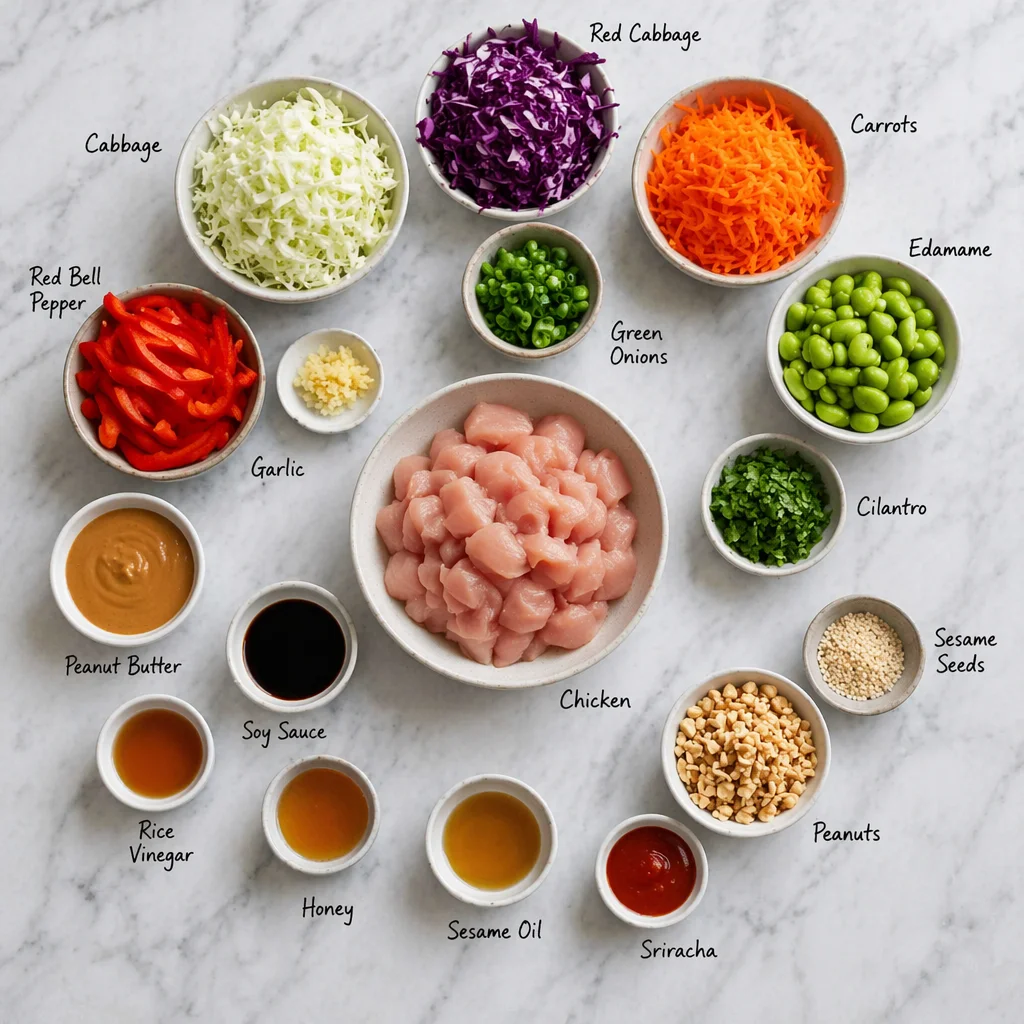
Prepare the peanut dressing. In a medium bowl, whisk together creamy peanut butter, soy sauce, rice vinegar, honey (or maple syrup), sesame oil, minced garlic, and grated ginger. The garlic and ginger provide a fragrant kick that balances the richness of the peanut butter. Slowly add warm water, one tablespoon at a time, whisking continuously until the dressing reaches a pourable consistency. You want it thick enough to coat the back of a spoon but thin enough to drizzle. Taste and adjust: more soy sauce for saltiness, more honey for sweetness, or a squeeze of lime for acidity. Set aside. The dressing can be made ahead and refrigerated for up to a week; just thin with a little warm water before using.
Bread the chicken. Working with a few pieces at a time, dredge each chicken piece in cornstarch, shaking off excess. Then dip into beaten eggs, letting any excess drip off. Finally, coat thoroughly in the panko-sesame mixture, pressing gently to adhere. Place the breaded pieces on a plate or baking sheet in a single layer. For extra crispiness, let them rest for 5-10 minutes; this helps the coating set. Do not overcrowd the breading station—keep one hand dry for the cornstarch and panko, and the other wet for the egg to avoid clumpy fingers.
Fry the chicken. In a large skillet or deep pan, heat about 1/2 inch of vegetable oil over medium-high heat until shimmering (around 350°F/175°C). To test, drop a panko crumb in; it should sizzle immediately. Carefully place the breaded chicken pieces in the hot oil, ensuring not to overcrowd (work in batches if needed). Fry for 3-4 minutes per side, until golden brown and cooked through (internal temperature of 165°F/74°C). The chicken should be deeply golden and crispy. Transfer to a paper towel-lined plate to drain excess oil. The sound of sizzling and the golden color are your cues. If the chicken browns too quickly, reduce heat slightly.
Assemble the salad base. In a large mixing bowl, combine shredded green cabbage, shredded carrots, sliced red bell pepper, chopped cilantro, and sliced green onions. Toss well to distribute the vegetables evenly. The cabbage and carrots provide a crunchy, refreshing base that contrasts beautifully with the warm crispy chicken. You can also add other veggies like julienned cucumber or snap peas for extra crunch.
Dress the salad. Pour about half of the peanut dressing over the vegetable mixture and toss until everything is evenly coated. Start with less dressing—you can always add more. The salad should be lightly dressed, not swimming. Taste and add more dressing if desired. The creamy dressing clings to the shreds, delivering flavor in every bite.
Serve and garnish. Divide the dressed salad among serving bowls. Top each with a generous portion of crispy sesame chicken. Drizzle additional peanut dressing over the chicken. Garnish with crushed peanuts, extra sesame seeds, and a lime wedge for squeezing. Serve immediately while the chicken is still hot and crunchy. The contrast of warm, crispy chicken with cool, crunchy salad is irresistible. Enjoy!
For best results
- For the crispiest chicken, ensure the oil is hot enough before frying. If the oil temperature drops too low, the breading will absorb oil and become greasy. Use a thermometer to maintain 350°F (175°C). If you don't have a thermometer, test with a breadcrumb: it should sizzle vigorously. Also, do not overcrowd the pan; fry in batches to keep the oil temperature stable. The cornstarch layer is key—it creates a barrier that prevents the egg wash from making the panko soggy. For an even lighter coating, double-dip: after the egg wash, go back into cornstarch, then egg again, then panko. This creates a shatteringly crisp crust.
- To make this dish gluten-free, use gluten-free panko breadcrumbs (or crushed rice crackers) and tamari instead of soy sauce. Cornstarch is naturally gluten-free. Also, check your peanut butter label—some brands add wheat starch. For a nut-free version, substitute the peanut butter with sunflower seed butter (sunbutter) and use coconut aminos instead of soy sauce. The flavor will be slightly different but still delicious.
- Meal prep tip: You can prep the salad ingredients (shred cabbage, slice peppers, chop cilantro) up to 2 days ahead and store them in airtight containers in the fridge. The peanut dressing keeps well for up to a week. However, fry the chicken just before serving for maximum crispiness. If you have leftover fried chicken, reheat it in an air fryer at 375°F (190°C) for 3-4 minutes to revive the crunch. Microwaving will make it soggy.
- For a healthier cooking method, bake the breaded chicken. Preheat oven to 425°F (220°C). Place breaded chicken on a wire rack set over a baking sheet (to allow air circulation). Spray generously with cooking oil. Bake for 12-15 minutes, flipping halfway, until golden and cooked through. The result is nearly as crispy as frying, with less oil. Alternatively, use an air fryer: preheat to 400°F (200°C), spray the basket with oil, arrange chicken in a single layer, and cook for 8-10 minutes, shaking halfway.
- The peanut dressing is incredibly versatile. Use it as a dip for spring rolls, a sauce for grilled chicken skewers, or a dressing for cold noodle salads. To make it spicier, add 1-2 teaspoons of sriracha or chili garlic sauce. For a creamier texture, blend in a tablespoon of coconut milk. If the dressing thickens after refrigeration, simply stir in a little warm water until it reaches the desired consistency.
- Choose the right cabbage: green cabbage is classic, but napa cabbage or a coleslaw mix (shredded cabbage and carrots) works great for convenience. For extra color, use purple cabbage. The key is to shred it thinly so it's easy to eat. You can use a mandoline or the shredding disc of a food processor for uniform pieces. After shredding, toss the cabbage with a pinch of salt and let it sit for 10 minutes, then squeeze out excess moisture—this prevents a watery salad.
Variations
- Make it a vegetarian meal: Replace the chicken with crispy tofu or tempeh. For tofu, press a block of extra-firm tofu for 30 minutes to remove moisture, then cut into cubes and follow the same breading and frying process. Tempeh can be steamed for 10 minutes to soften, then sliced and breaded. Both options absorb the peanut dressing beautifully and provide a satisfying protein boost.
- Try a different protein: Swap chicken for shrimp, pork tenderloin, or thinly sliced beef. Shrimp cooks quickly—just 2-3 minutes per side. For pork or beef, slice against the grain into thin strips and adjust cooking time accordingly. The breading works with any protein; just ensure even thickness for uniform cooking.
- Add more crunch: Incorporate toppings like crispy wonton strips, fried shallots, or toasted slivered almonds. For a low-carb version, skip the panko and use crushed pork rinds or almond flour mixed with sesame seeds. You can also add edamame or roasted chickpeas for extra texture and protein.
- Transform into a noodle salad: Serve the crispy chicken and veggies over a bed of cooked soba noodles, rice noodles, or even zucchini noodles (zoodles). Toss the noodles with a bit of the dressing before adding the toppings. This makes the dish more filling and turns it into a complete meal in a bowl.
- Spicy Thai variation: Add 1-2 teaspoons of sriracha or red curry paste to the peanut dressing for heat. Garnish with fresh Thai basil and mint leaves. You can also include julienned mango or pineapple for a sweet-tangy twist. For extra umami, add a splash of fish sauce to the dressing.
Nutrition
- Calories485 kcal
- Total Fat28g
- Saturated Fat5g
- Cholesterol120mg
- Sodium820mg
- Total Carbohydrates35g
- Dietary Fiber5g
- Sugars12g
- Protein32g