
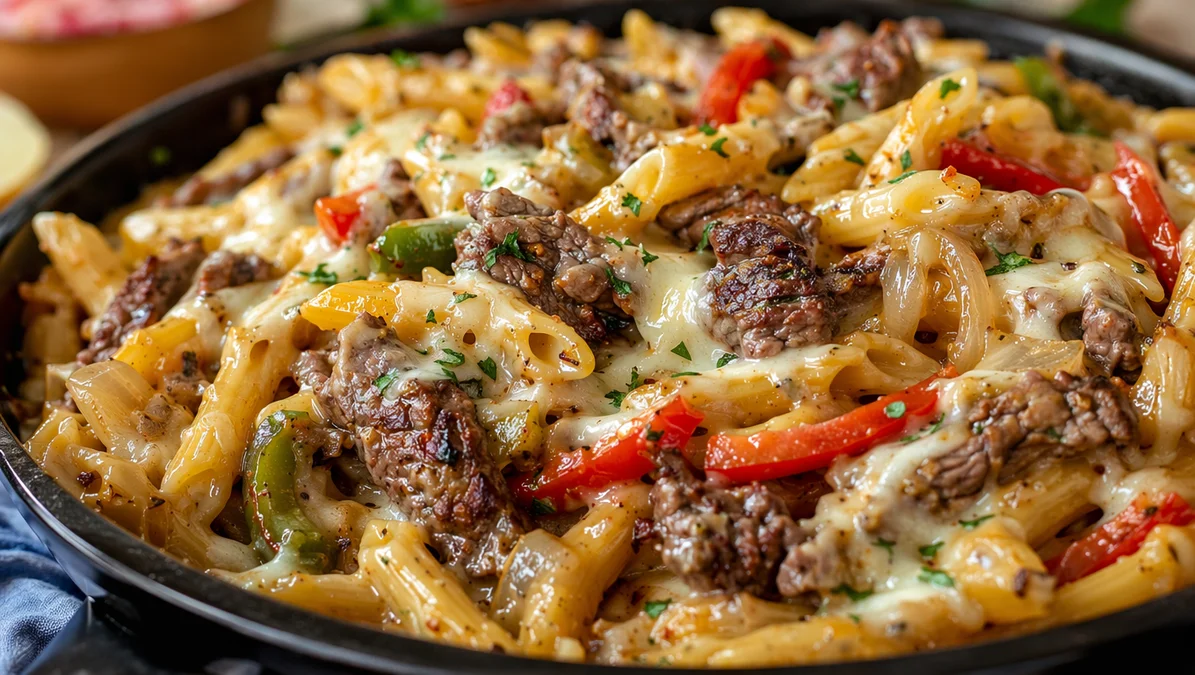
This quick and easy Philly Cheesesteak Pasta recipe combines tender steak, bell peppers, and onions in a creamy cheese sauce for a delicious family dinner. Ready in 30 minutes, it's…
Ingredients
Instructions
Bring a large pot of salted water to a rolling boil. Add 8 ounces of pasta (penne or rigatoni work beautifully because their ridges and hollow centers catch the creamy sauce). Cook according to package directions until al dente—usually about 8-10 minutes. You want the pasta to have a slight bite, as it will continue to cook slightly when tossed with the hot sauce. Reserve 1 cup of pasta water before draining; the starchy water is liquid gold for thinning the sauce if needed. Drain the pasta and set aside. While the pasta cooks, you can prepare the other components to maximize efficiency.
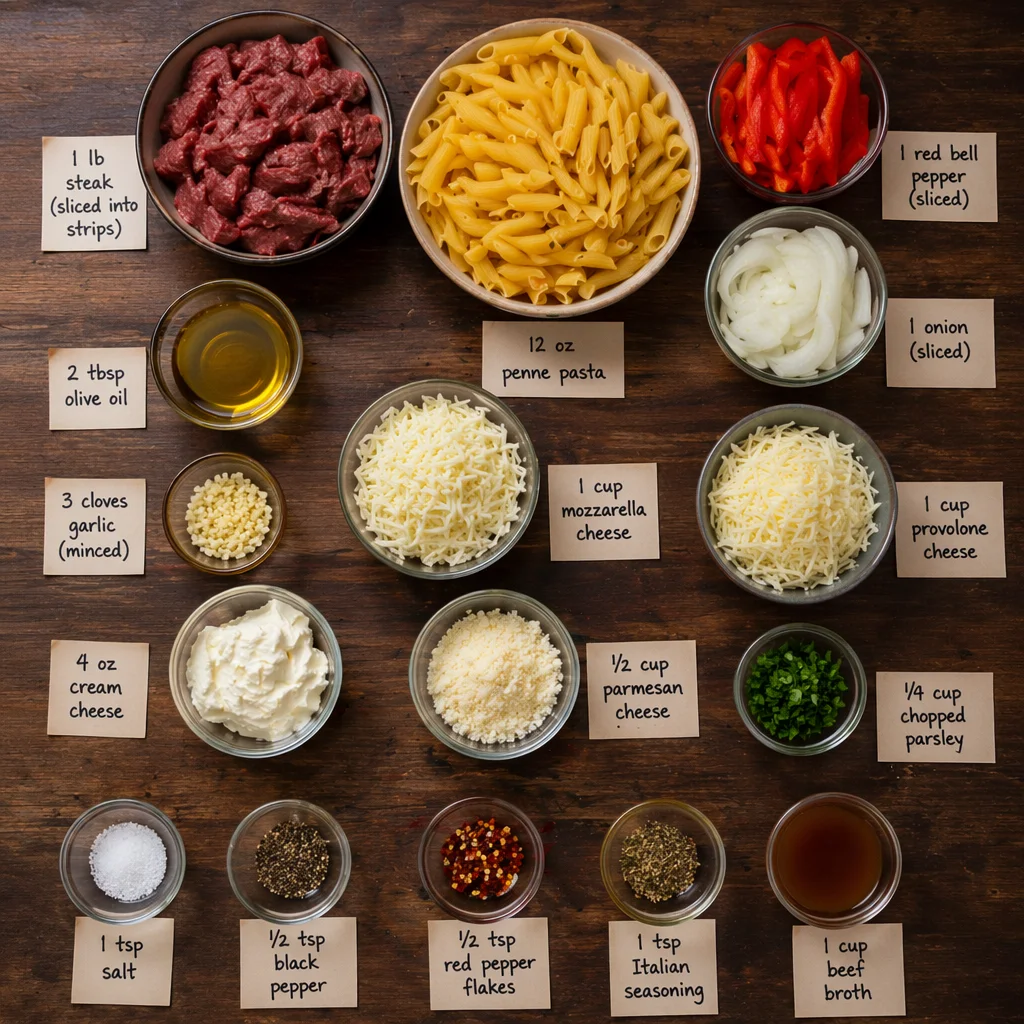
While the pasta cooks, season the thinly sliced steak generously with salt and pepper. The key to tender steak in a quick-cooking dish is to slice it very thin—about 1/8-inch thick. For easier slicing, place the steak in the freezer for 15-20 minutes before cutting; this firms it up without freezing solid. Heat 1 tablespoon of olive oil in a large skillet or Dutch oven over medium-high heat until shimmering. Add the steak in a single layer (work in batches if needed to avoid overcrowding). Sear for 1-2 minutes per side until browned but still pink in the center. Overcooking at this stage will result in tough meat later. Transfer the seared steak to a plate and set aside.
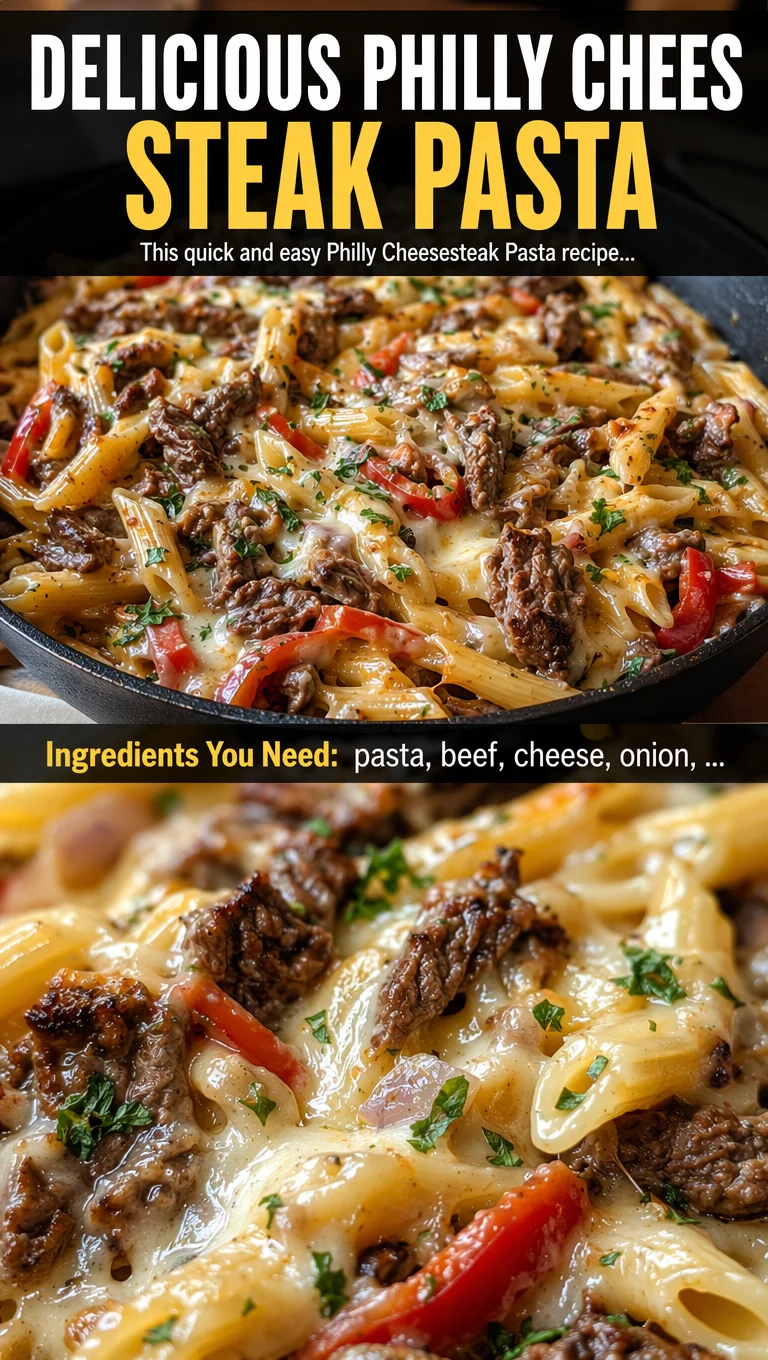
Reduce the heat to medium and add the remaining 1 tablespoon of olive oil to the same skillet. Add the sliced onion and bell pepper. Sauté for 4-5 minutes, stirring occasionally, until the vegetables are softened and beginning to caramelize. The edges of the onion should turn golden brown, adding a sweet, savory depth that mimics the classic cheesesteak experience. Add the minced garlic and cook for 30 seconds until fragrant, stirring constantly to prevent burning. The aroma of garlic blooming in the oil is your cue to move to the next step.
Push the vegetables to one side of the skillet and add the butter. Once melted, sprinkle the flour over the butter and whisk continuously for 1 minute to form a roux. This cooks out the raw flour taste and thickens the sauce. Slowly pour in the milk while whisking vigorously to prevent lumps. Then add the beef broth, continuing to whisk until the mixture is smooth. Bring to a gentle simmer; the sauce will start to thicken after about 2-3 minutes. It should coat the back of a spoon—if it seems too thick, add a splash of reserved pasta water.
Reduce the heat to low and add the cream cheese, breaking it into pieces as you stir. Whisk until fully melted and incorporated, creating a velvety base. Gradually add the shredded provolone cheese, a handful at a time, stirring until each addition is melted before adding more. The sauce will become rich, creamy, and slightly stringy—a hallmark of a great cheesesteak. Season with smoked paprika, salt, and pepper to taste. If the sauce is too thick, thin with pasta water 1 tablespoon at a time.
Return the cooked steak and any accumulated juices to the skillet. Add the drained pasta and toss everything together using tongs or a wooden spoon until the pasta and steak are evenly coated in the creamy cheese sauce. Cook for 1-2 minutes over low heat to let the flavors meld. The sauce will cling to every nook and cranny of the pasta. Taste and adjust seasoning if needed. Serve immediately, garnished with fresh parsley and extra shredded provolone if desired.
For best results
- For the most tender steak, choose ribeye or sirloin and slice it against the grain into thin strips. Freezing the steak for 15-20 minutes before slicing makes this task easier and yields uniform pieces that cook evenly. If you're short on time, you can also use pre-sliced stir-fry beef from the grocery store, but be aware that it may be less tender. Avoid overcooking the steak during the initial sear; it will finish cooking when tossed with the hot sauce.
- The cheese sauce is the soul of this dish. Use high-quality provolone that melts well—avoid pre-shredded cheese, which contains anti-caking agents that can make the sauce grainy. Shred the provolone yourself from a block for the smoothest result. Cream cheese adds richness and helps stabilize the sauce, preventing it from breaking. If you prefer a sharper flavor, substitute half the provolone with aged white cheddar.
- Pasta choice matters: short, sturdy shapes like penne, rigatoni, or fusilli are ideal because they hold up to the hearty sauce and meat. Avoid delicate pastas like angel hair or spaghetti, which can become mushy. Cook the pasta al dente—it will absorb some sauce as it sits, so starting with a firm texture ensures it doesn't turn into mush.
- To save time, prep all ingredients before you start cooking. Slice the steak and vegetables, shred the cheese, and measure the liquids. This mise en place approach makes the 30-minute timeline achievable without stress. The entire dish comes together quickly, so having everything at arm's length prevents burning or overcooking.
- Leftovers can be stored in an airtight container in the refrigerator for up to 3 days. Reheat gently on the stovetop with a splash of milk or beef broth to restore the creamy consistency. Avoid microwaving, as it can make the sauce separate and the steak chewy. This pasta also freezes well for up to 2 months—thaw overnight in the fridge and reheat as directed.
- For a lighter version, you can use half-and-half instead of whole milk, and reduce the cream cheese to 2 ounces. The sauce will be less rich but still creamy. Alternatively, swap the provolone for part-skim mozzarella to cut some fat without sacrificing meltability. To boost protein, add a scoop of unflavored collagen peptides or use high-protein pasta.
Variations
- Chicken Cheesesteak Pasta: Replace the beef with boneless, skinless chicken thighs or breasts. Slice them thin and cook just until no longer pink. Chicken pairs beautifully with the creamy provolone sauce and sautéed peppers and onions. For extra flavor, season the chicken with garlic powder and onion powder before searing.
- Mushroom and Swiss Variation: Omit the steak for a vegetarian version. Sauté 8 ounces of sliced cremini mushrooms along with the onions and peppers. Use Swiss cheese instead of provolone for a nutty, earthy flavor. The mushrooms provide a meaty texture that satisfies even carnivores. Add a splash of Worcestershire sauce (or soy sauce for vegetarian) to deepen the umami.
- Spicy Cajun Philly Pasta: Add 1 teaspoon of Cajun seasoning to the steak before searing and another 1/2 teaspoon to the sauce. Replace the green bell pepper with a poblano pepper for a mild heat. Top with sliced jalapeños and a drizzle of hot sauce before serving. This variation brings a Louisiana kick to the classic cheesesteak profile.
- Low-Carb/Keto Version: Substitute the pasta with zucchini noodles (zoodles) or cauliflower florets. For zoodles, sauté them briefly after cooking the sauce and toss gently to warm through—overcooking will make them watery. For cauliflower, roast the florets at 400°F for 20 minutes until tender, then fold into the sauce with the steak. Use heavy cream instead of milk and increase the cream cheese to 4 ounces to keep the sauce keto-friendly.
- Cheesesteak Stuffed Shells: Cook jumbo pasta shells according to package directions. Prepare the steak and vegetable mixture as directed, but chop the steak into small pieces. Mix the filling with half the cheese sauce, stuff into the shells, and arrange in a baking dish. Pour the remaining sauce over the top, sprinkle with extra provolone, and bake at 375°F for 15-20 minutes until bubbly. This is a fun, interactive twist for dinner parties.
Nutrition
- Calories650 kcal
- Total Fat38g
- Saturated Fat20g
- Cholesterol145mg
- Sodium820mg
- Total Carbohydrates42g
- Dietary Fiber3g
- Sugars8g
- Protein35g