
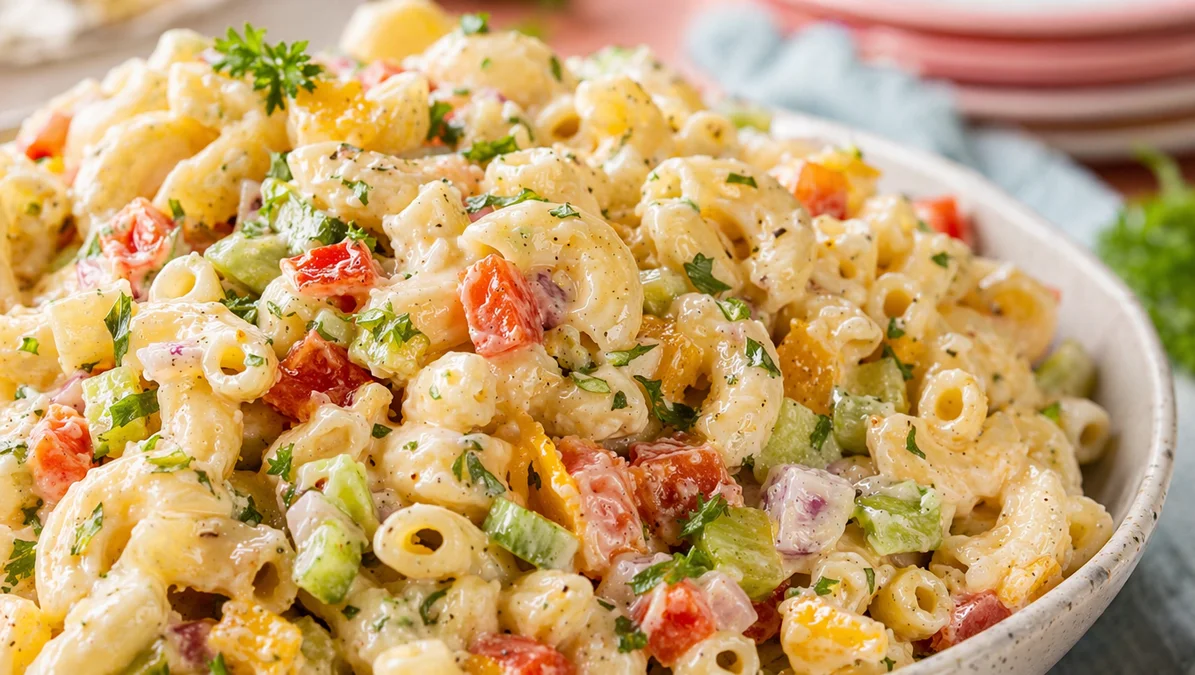
This creamy potluck pasta salad is a simple, crowd-pleasing recipe perfect for family gatherings and summer picnics. Made with pantry staples, it's a budget-friendly and delicious side dish that pairs…
Ingredients
Instructions
Bring a large pot of generously salted water to a rolling boil. Add the pasta and cook according to package directions until al dente — typically 7-9 minutes for elbow macaroni. Stir occasionally to prevent sticking. Al dente pasta retains a slight firmness at the center, which is crucial for pasta salad because it will continue to absorb dressing as it sits. Overcooked pasta becomes mushy and will not hold up well in the salad. Once done, drain the pasta in a colander and rinse immediately under cold running water to stop the cooking process and cool it down quickly. Shake the colander well to remove excess water, then set aside to drain thoroughly. For best results, spread the pasta on a baking sheet in a single layer to cool completely, which prevents clumping and ensures the dressing coats each piece evenly.
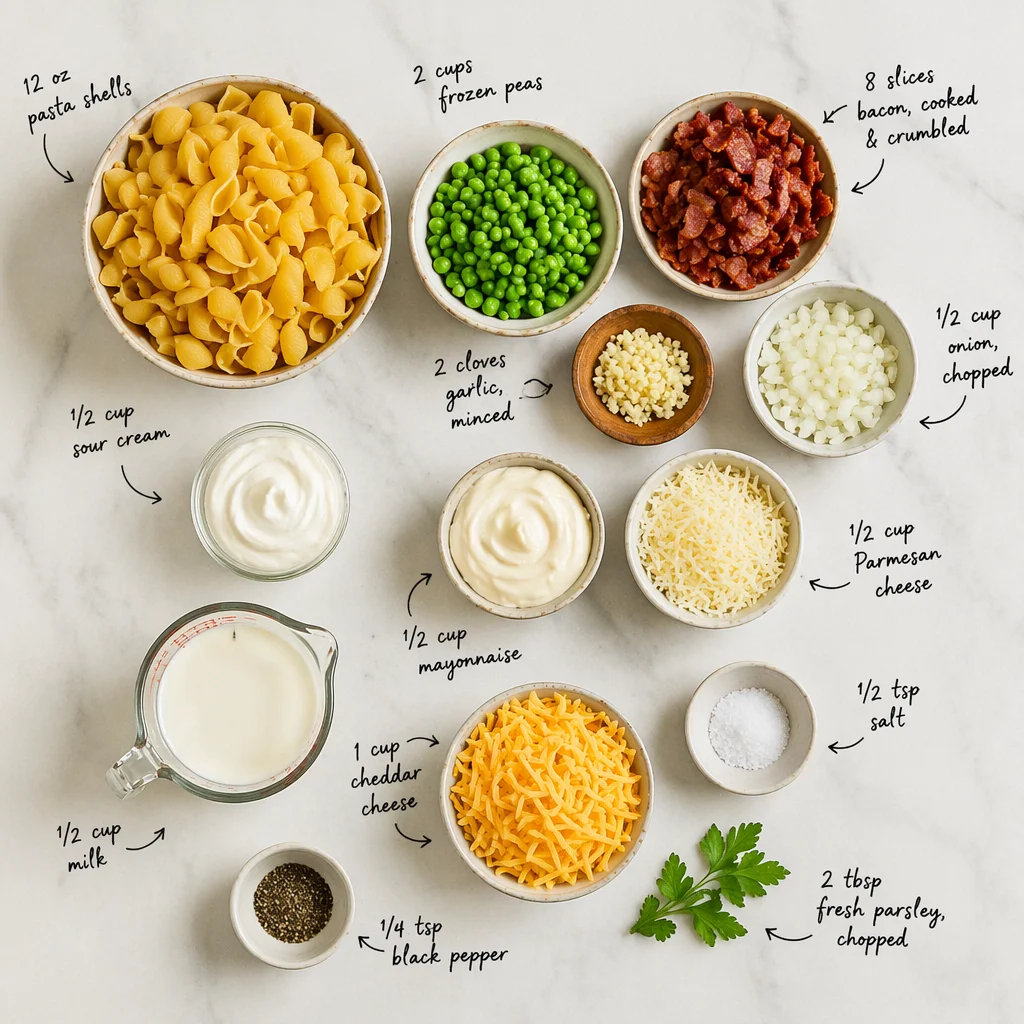
While the pasta cools, prepare the creamy dressing. In a medium mixing bowl, combine the mayonnaise, sour cream, apple cider vinegar, Dijon mustard, sugar, salt, black pepper, and garlic powder. Whisk vigorously until the mixture is smooth, pale, and emulsified. The apple cider vinegar provides a subtle tang that balances the richness of the mayonnaise and sour cream, while the Dijon mustard adds a gentle heat and helps stabilize the emulsion. Taste the dressing and adjust seasoning if needed — it should be slightly more seasoned than you think, as the pasta will absorb some of the salt. For a thinner dressing, add a tablespoon of milk or buttermilk. Cover and refrigerate the dressing while you prep the vegetables to allow the flavors to meld.
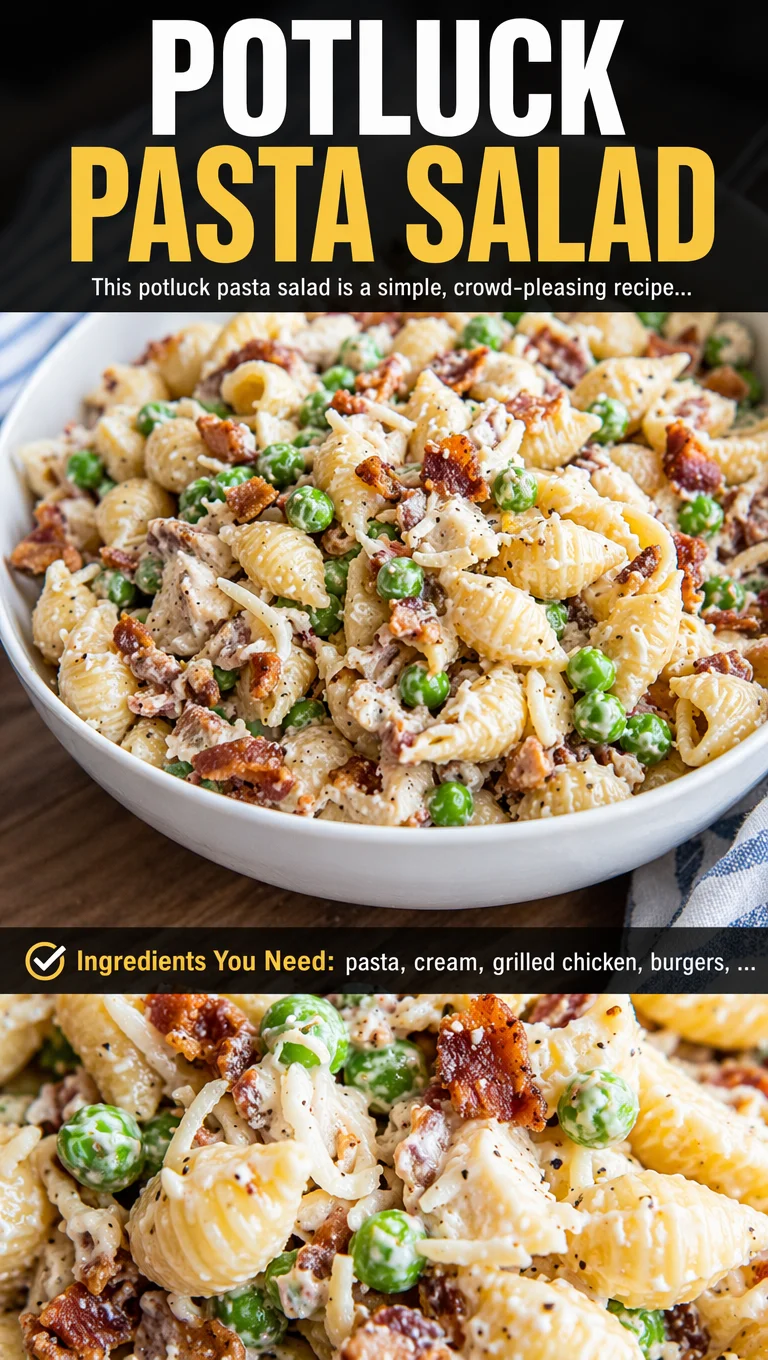
Prepare the vegetables. Dice the red and green bell peppers into small, uniform pieces about 1/4-inch in size. Uniformity ensures even distribution and a pleasant crunch in every bite. Finely dice the red onion — if you prefer a milder onion flavor, soak the diced onion in a bowl of cold water for 10 minutes, then drain and pat dry. Thaw the frozen peas by placing them in a fine-mesh strainer and rinsing under cool running water for about 30 seconds, or let them sit at room temperature for 10 minutes. Chop the fresh parsley leaves, discarding any thick stems. Pat all vegetables dry with paper towels to remove excess moisture, which could water down the dressing.
In a large mixing bowl, combine the cooled pasta, diced bell peppers, red onion, peas, and parsley. Pour the prepared dressing over the top. Using a large rubber spatula or wooden spoon, fold the ingredients together gently but thoroughly, ensuring every piece of pasta is coated with the creamy dressing. Be careful not to mash the pasta. The salad should look glossy and well-combined, with colorful vegetable pieces evenly dispersed. If the salad seems dry, you can add an extra tablespoon of mayonnaise or a splash of milk. Cover the bowl with plastic wrap and refrigerate for at least 1 hour before serving. This chilling time allows the flavors to meld and the pasta to absorb the dressing, resulting in a more cohesive and flavorful salad.
Before serving, give the pasta salad a good stir to redistribute the dressing that may have settled. Taste and adjust seasoning with salt and pepper if needed. If the salad seems too thick after chilling, stir in a tablespoon of milk or water to loosen it. Transfer to a serving bowl and garnish with additional chopped parsley or a sprinkle of paprika for color. Serve cold or at room temperature. This pasta salad is perfect alongside grilled chicken, burgers, hot dogs, or any barbecue favorites. It can be made a day in advance and actually tastes even better the next day as the flavors continue to develop.
For best results
- Don't skip rinsing the pasta with cold water after cooking. This stops the carryover cooking and removes excess starch that can make the salad gummy. For best texture, drain the pasta, rinse until cool, and let it drain thoroughly — even spread it on a baking sheet to cool completely before mixing. This ensures each piece of pasta remains distinct and doesn't clump together.
- Season the pasta water generously — it should taste like the sea. Pasta absorbs salted water as it cooks, which seasons it from the inside out. Undersalted pasta will result in a bland salad no matter how flavorful the dressing. Use about 1 tablespoon of salt per 4 quarts of water.
- Make the dressing ahead of time. Whisk together the mayonnaise, sour cream, vinegar, mustard, and seasonings at least 30 minutes before assembling the salad. This resting time allows the flavors to meld and the garlic powder to rehydrate, resulting in a more harmonious taste. The dressing can be refrigerated for up to 3 days.
- For the best texture, use full-fat mayonnaise and sour cream. Low-fat versions contain more water and stabilizers, which can make the dressing thin and watery. Full-fat ingredients provide a rich, creamy consistency that clings beautifully to the pasta. If you're concerned about calories, you can use half the amount of dressing and still get great flavor.
- Let the salad chill for at least 1 hour, but preferably 2-4 hours or overnight. This resting period is crucial for flavor development — the pasta absorbs the dressing, the vegetables soften slightly, and the flavors meld together. However, if you're short on time, you can serve it immediately, though the taste won't be as developed.
- If you're making this salad for a picnic or outdoor event, keep it chilled in a cooler with ice packs. Creamy pasta salads should not sit at room temperature for more than 2 hours (1 hour if the temperature is above 90°F). To be safe, serve the salad in a bowl set over a larger bowl of ice, or divide it into smaller portions that can be replenished from the cooler.
Variations
- Add protein: Turn this side dish into a main course by adding 2 cups of shredded rotisserie chicken, diced ham, cooked bacon bits, or canned tuna (drained and flaked). For a vegetarian protein boost, add 1 cup of canned chickpeas or white beans, rinsed and drained. The protein adds heartiness and makes the salad more satisfying as a lunch or light dinner.
- Make it dairy-free: Substitute the sour cream with an equal amount of dairy-free yogurt or vegan sour cream. Use a vegan mayonnaise made from aquafaba or avocado oil. The result will be slightly tangier but still creamy and delicious. Ensure all other ingredients are dairy-free as well.
- Add crunch: For extra texture, fold in 1/2 cup of toasted sunflower seeds, chopped pecans, or slivered almonds just before serving. You can also add 1/2 cup of diced celery or jicama for a fresh, crisp bite. These additions provide contrast to the soft pasta and creamy dressing.
- Switch up the vegetables: This recipe is incredibly versatile. Try adding diced cucumber (seeds removed to prevent sogginess), cherry tomatoes halved, shredded carrots, chopped broccoli florets, or roasted red peppers. In the winter, use roasted butternut squash cubes or sautéed mushrooms for a heartier version.
- Herb swap: If you don't have fresh parsley, use fresh dill, chives, basil, or a combination. Dill pairs exceptionally well with the creamy dressing and adds a bright, slightly anise-like flavor. You can also add 1 teaspoon of dried dill or oregano if fresh herbs are unavailable.
Nutrition
- Calories215 kcal
- Total Fat12g
- Saturated Fat7g
- Cholesterol45mg
- Sodium180mg
- Total Carbohydrates26g
- Dietary Fiber1g
- Sugars17g
- Protein3g