
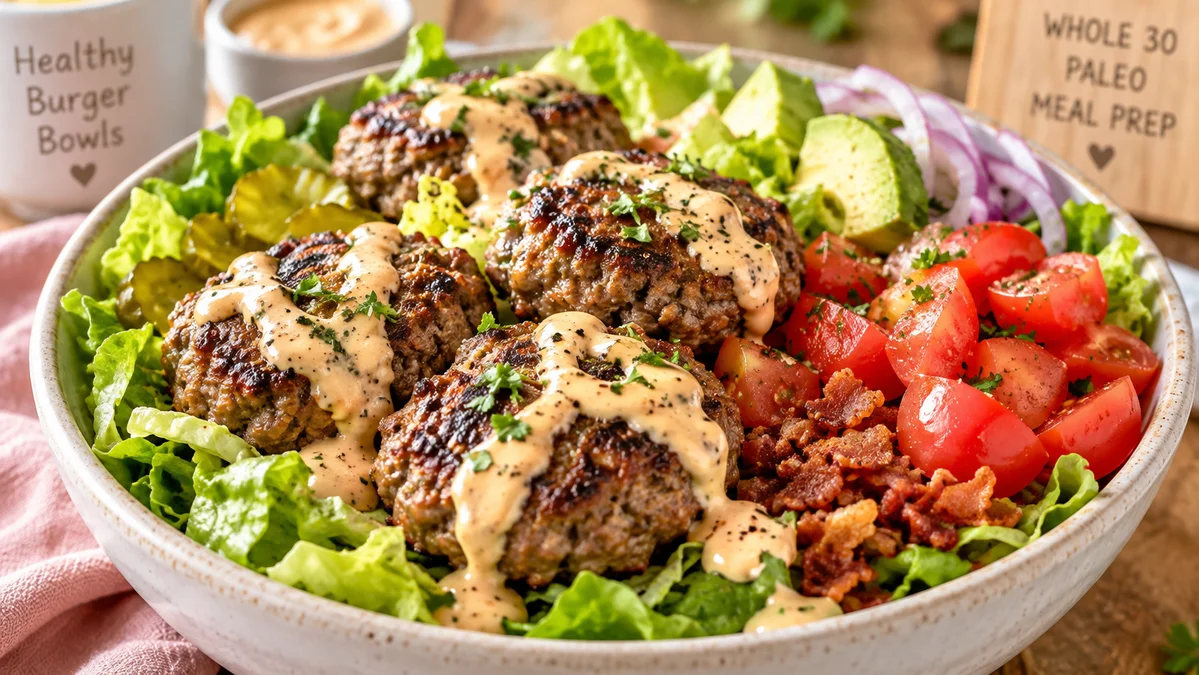
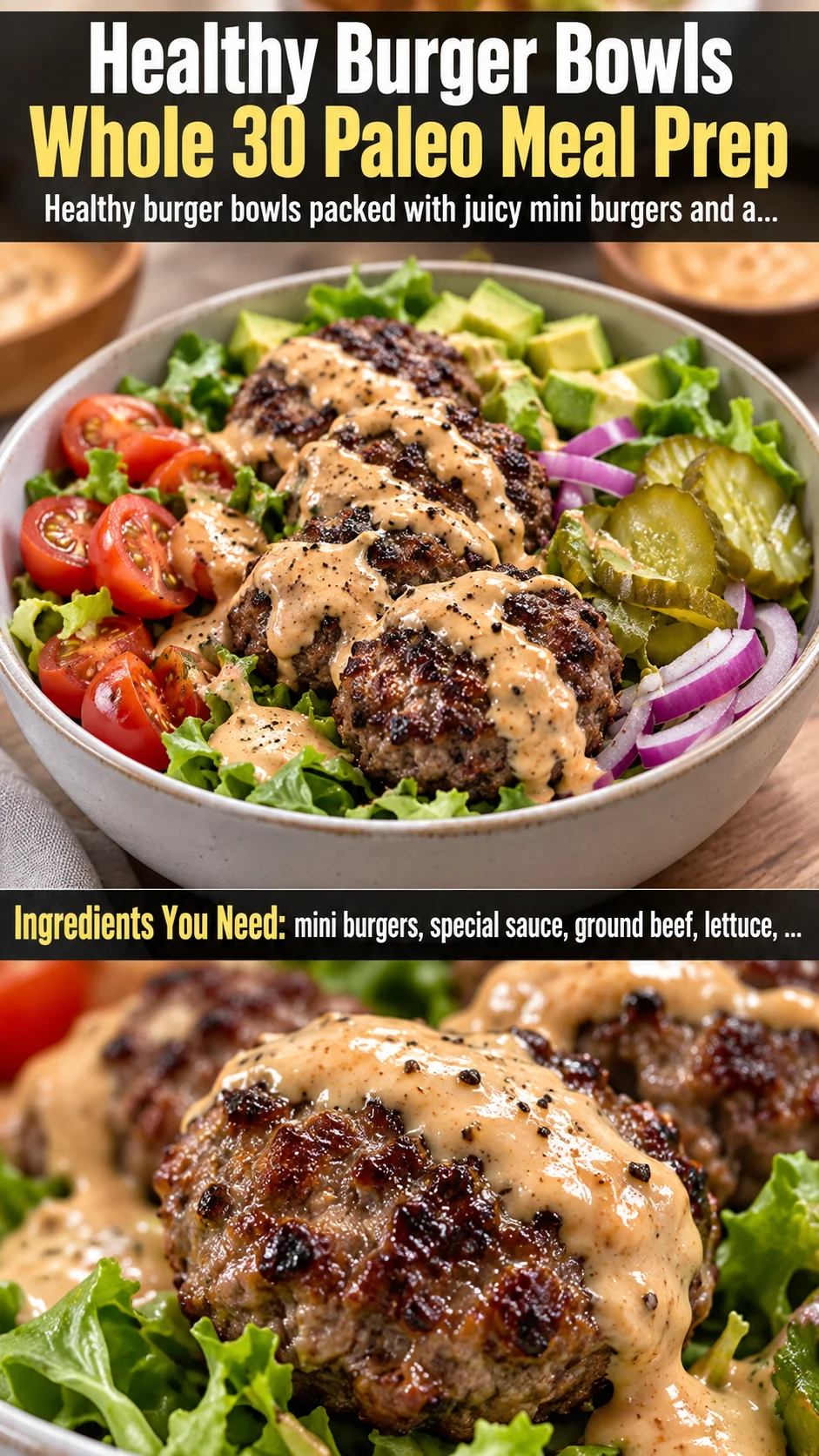
Juicy mini burgers, creamy Whole30 special sauce, and crisp veggies make these healthy burger bowls the ultimate Paleo meal prep. Ready in 30 minutes!
Ingredients
Instructions
Make the special sauce first so the flavors have time to meld. In a medium bowl, whisk together 1/2 cup Whole30-compliant paleo mayonnaise, 2 tablespoons sugar-free Whole30 ketchup, 1 tablespoon yellow mustard, 1 tablespoon sugar-free dill pickle relish, 1 teaspoon apple cider vinegar, 1/2 teaspoon smoked paprika, 1/2 teaspoon garlic powder, and 1/4 teaspoon cayenne pepper if you like a little heat. The sauce should be thick enough to coat the back of a spoon but loose enough to drizzle; if it feels too thick, add pickle juice or coconut aminos one tablespoon at a time until it reaches a pourable consistency. Taste and adjust: it should be creamy, tangy, slightly sweet, and smoky, with a gentle warmth. Cover and refrigerate while you prepare the burgers. This resting time allows the dried spices to hydrate and the flavors to marry, which is a classic culinary trick for building depth in no-cook sauces. For meal prep, consider making a double batch; this sauce is also excellent on grilled chicken, roasted potatoes, or as a dip for fresh vegetables. For Whole30 compliance, double-check that your mayo, ketchup, mustard, and relish are all free of added sugar and seed oils. If you cannot find sugar-free relish, finely chop dill pickles and add a pinch of dried dill.
While the sauce chills, wash and dry all the produce thoroughly. Chop the romaine lettuce into bite-sized ribbons, halve the cherry tomatoes, dice the red onion, shred the carrots, slice the cucumber, and slice the avocado (wait to slice the avocado until just before serving to prevent browning). If you are meal prepping, arrange the vegetables in separate airtight containers; keeping them dry and separate prevents soggy lettuce and keeps textures crisp. The goal is a bowl that eats like a classic burger: crisp, cool lettuce as the base, juicy tomatoes for acidity, sweet onion for bite, and creamy avocado for richness. If you are serving immediately, pile everything into four wide, shallow bowls. A shallow bowl allows you to see all the components and ensures every bite gets a bit of everything. For meal prep, use four airtight glass containers and layer sturdy ingredients at the bottom and delicate greens on top. This step is also a great time to cook the bacon until crisp, then crumble it and set it aside.
In a large bowl, combine the ground beef, almond flour, egg, garlic powder, onion powder, smoked paprika, sea salt, black pepper, and coconut aminos. Use your hands to mix gently until just combined. Overmixing develops protein strands and makes the burgers tough and bouncy instead of tender and juicy, so stop as soon as the ingredients are incorporated. The almond flour acts as a binder and helps retain moisture, while the egg adds richness and structure. Divide the mixture into 12 equal portions, about 2 ounces each, and roll them into balls, then flatten into 1/2-inch-thick mini patties. Use your thumb to press a shallow dimple in the center of each patty; this prevents the center from bulging as it cooks, so the patties stay flat and cook evenly. Place the patties on a parchment-lined plate and refrigerate for 10 minutes if you have time. Chilling helps them hold their shape and keeps them from falling apart during searing. Just before cooking, pat the surfaces dry with a paper towel; moisture is the enemy of a good sear.
Heat a large cast-iron or heavy-bottomed skillet over medium-high heat. Add the avocado oil and swirl to coat the pan. Once the oil shimmers and a drop of water flicked into the pan sizzles and evaporates immediately, carefully place the mini patties in the skillet, leaving at least 1 inch between them to avoid steaming. Work in batches if needed. Sear undisturbed for 2 to 3 minutes, until a deep golden-brown crust forms and the patties release easily from the pan. If they stick, they are not ready to flip. Flip and cook for another 2 to 3 minutes for medium, or 3 to 4 minutes for medium-well. For Whole30, avoid overcooking; ground beef is safe at 160°F (71°C), but many prefer medium for juiciness. Transfer the burgers to a plate and let them rest for 5 minutes. The rest allows juices to redistribute so they do not run out and leave the burgers dry. You should hear a gentle sizzle and smell the smoky paprika as they cook, and the exterior should be deeply browned with a slightly charred edge.
Divide the chopped lettuce among four bowls. Top with the cherry tomatoes, red onion, shredded carrots, cucumber, avocado, crumbled bacon, and sliced pickles. Add three mini burgers to each bowl. Drizzle generously with the special sauce, about 2 tablespoons per bowl or more to taste. Sprinkle with sesame seeds or fresh chives. For a classic burger flavor, add a few extra pickle slices and a pinch of flaky salt. Serve immediately. If you are meal prepping, keep the sauce and avocado separate until serving; add the sauce in a small container and slice avocado fresh each day. The bowls should look vibrant and abundant, with the seared burgers as the centerpiece. The contrast of warm, juicy burgers against cool, crisp vegetables and creamy, tangy sauce is what makes this dish so satisfying. Feel free to add extra pickles, a squeeze of lime, or a dash of hot sauce if you like.
For meal prep, divide the lettuce and raw vegetables among four airtight containers. Add the mini burgers, either whole or sliced, and store the special sauce in small jars. Refrigerate for up to 4 days. When ready to eat, you can enjoy the bowls cold, or gently reheat the burgers in a skillet or microwave for 30 to 60 seconds. Avoid overheating, which dries them out. If you prefer warm bowls, keep the lettuce separate from the hot burgers until serving. Avocado should be sliced fresh each day; to prevent browning, toss slices with a little lime juice. The special sauce thickens in the fridge, so stir in a splash of pickle juice or water to loosen before drizzling. These bowls are also freezer-friendly if you freeze the cooked burgers and sauce separately for up to 3 months; thaw overnight in the fridge. To reheat from frozen, warm the burgers in a covered skillet over medium-low heat until heated through, then assemble with fresh vegetables and sauce.
For best results
- Choose the right ground beef for maximum juiciness and flavor. For these mini burgers, I recommend 85/15 or 90/10 ground beef. The 85/15 blend has enough fat to keep the patties moist and flavorful, while 90/10 is a leaner option that still works well because the egg and almond flour help retain moisture. If you use 93/7 or leaner, add an extra tablespoon of olive oil or paleo mayo to the meat mixture. For the best texture, avoid grinding your own beef too finely; a slightly coarse grind gives the burgers a better bite. Also, let the meat come to room temperature for about 10 minutes before mixing; cold meat can be tough to handle and may cook unevenly.
- The secret to a perfect sear is a hot pan and dry patties. Moisture on the surface of the burgers creates steam, which prevents browning. Pat the patties dry with a paper towel right before they hit the skillet. Use a heavy-bottomed skillet, such as cast iron, and preheat it over medium-high heat for at least 3 minutes. The oil should shimmer but not smoke. If you crowd the pan, the temperature drops and the burgers steam instead of sear, so leave at least an inch between patties and work in batches if necessary. Resist the urge to press down on the burgers with a spatula; pressing squeezes out juices and dries them out. Let the crust form naturally, and only flip once the patty releases easily from the pan.
- The special sauce is the soul of this recipe, so taste and adjust it to your liking. Start with the base ratio of mayo, ketchup, mustard, and relish, then add apple cider vinegar for tang, smoked paprika for depth, and cayenne for heat. If you like a sweeter sauce, add a teaspoon of date paste or a pinch of coconut sugar (omit for Whole30). For a thinner, more dressing-like sauce, whisk in pickle juice or water. For a thicker sauce, add a tablespoon of paleo mayo. Make it a day ahead if possible; the flavors deepen overnight. This sauce is incredibly versatile: use it as a dip for sweet potato fries, a spread for lettuce wraps, or a dressing for coleslaw. Store it in a jar in the fridge for up to 1 week.
- Meal prep like a pro by keeping components separate. The biggest mistake people make when prepping burger bowls is assembling everything together, which leads to soggy lettuce and mushy vegetables. Instead, store the lettuce, raw veggies, cooked burgers, and sauce in separate containers. When you are ready to eat, combine them in a bowl. This keeps the textures fresh and allows you to reheat the burgers if desired without wilting the greens. Use glass containers with airtight lids for the best freshness. If you want to save even more time, chop the vegetables and cook the burgers on Sunday, then assemble bowls throughout the week. The burgers stay juicy for up to 4 days, and the sauce lasts a week.
- Keep it Whole30 and Paleo by reading labels carefully. Many mayonnaises, ketchups, mustards, and relishes contain added sugar, seed oils, or artificial preservatives. Look for brands that use avocado oil or olive oil, and sweeten with date paste or coconut sugar only if you are not strictly Whole30. For strict Whole30, avoid any form of added sugar, including honey, maple syrup, and coconut sugar. Also, check that your bacon is sugar-free and nitrate-free. If you cannot find compliant ketchup, make your own by simmering tomato paste, apple cider vinegar, date paste, garlic powder, and salt. The same goes for relish; chopped dill pickles with a splash of pickle juice work beautifully.
- Texture is everything in these bowls. You want a contrast of warm, juicy burgers, cool, crisp lettuce, creamy avocado, crunchy carrots and cucumber, and tangy, smooth sauce. To achieve this, consider the order of assembly: lettuce on the bottom, then sturdy vegetables, then burgers, then sauce, then delicate garnishes like avocado and sesame seeds. If you are packing for lunch, keep the sauce in a separate small container and drizzle it over just before eating. Add a handful of crushed pork rinds or toasted nuts for extra crunch if you are not Whole30. A squeeze of fresh lime or lemon juice brightens all the flavors and cuts through the richness of the beef and sauce.
- Troubleshooting common issues: If your burgers fall apart, it is usually because the mixture is too wet or not chilled enough. Add an extra tablespoon of almond flour, chill for 15 minutes, and handle gently. If the sauce is too thick, add pickle juice one teaspoon at a time. If the bowls taste bland, check your salt levels; salt brings out the flavor of the beef and vegetables. If the lettuce wilts, it is because it was not dried thoroughly or was stored with wet ingredients. Use a salad spinner or pat the leaves dry with paper towels. If you want a warmer bowl, sear the burgers just before serving and add them hot. Finally, if you are short on time, you can use pre-chopped vegetables from the store, but fresher produce always tastes better.
Variations
- Turkey or chicken variation: Substitute ground turkey or ground chicken for the beef to lighten things up. Because poultry is leaner, add an extra tablespoon of almond flour and a tablespoon of olive oil to the meat mixture to keep the patties moist. Cook to an internal temperature of 165°F (74°C). You can also add a teaspoon of poultry seasoning or dried sage for a sausage-like flavor. For a Greek twist, mix in oregano, lemon zest, and garlic. The cooking time may be slightly shorter, so check for doneness after 2 minutes per side. These poultry burgers are excellent with the same special sauce, but a dairy-free tzatziki also pairs beautifully.
- Spicy Southwest twist: Add 1 teaspoon chili powder, 1/2 teaspoon cumin, and 1/4 teaspoon chipotle powder to the burger mixture. Swap the special sauce for a chipotle-lime mayo: combine paleo mayo, lime juice, finely chopped chipotle in adobo (Whole30-compliant), and fresh cilantro. Top the bowls with roasted corn (omit for Whole30), black olives, salsa, and sliced jalapeños. For extra protein, add a scoop of guacamole. This variation has a smoky, spicy kick that is perfect for taco night. If you like heat, leave the seeds in the jalapeños; for a milder version, remove them. The chipotle-lime mayo also makes a great dip for plantain chips.
- Mediterranean burger bowl: Season the burgers with dried oregano, garlic, and lemon zest. Replace the special sauce with a dairy-free tzatziki made from coconut yogurt, grated cucumber, dill, lemon juice, and garlic. Add chopped cucumber, Kalamata olives, red onion, cherry tomatoes, and a sprinkle of dairy-free feta (or omit for Whole30). You can also add roasted red peppers and a handful of fresh parsley. The combination of warm, herby burgers and cool, tangy tzatziki is incredibly refreshing. If you are not dairy-free, traditional feta or goat cheese works well. Serve with cauliflower rice or roasted potatoes for a heartier meal.
- Breakfast burger bowl: Top the bowls with a fried egg or sliced hard-boiled eggs. Add roasted sweet potato cubes and sautéed spinach or kale. Drizzle with the special sauce or a Whole30 hollandaise-style sauce made with paleo mayo, lemon juice, and a pinch of cayenne. This variation is perfect for a savory breakfast or brunch. The runny yolk acts as an extra sauce, adding richness to the bowl. For meal prep, cook the eggs fresh or use hard-boiled eggs, which keep well in the fridge for up to a week. You can also add avocado and crispy bacon for a complete breakfast experience.
- Low-carb and Keto adaptation: Omit the shredded carrots and use extra leafy greens and avocado. Add a handful of shredded cheese if you are not strictly Whole30 or Paleo. Use lettuce wraps instead of bowls, or serve the burger mixture over cauliflower rice. For a keto-friendly sauce, use full-fat mayo and sugar-free ketchup. You can also add a dollop of sour cream or Greek yogurt if dairy is allowed. This version is naturally low in carbs and high in healthy fats, making it a great option for those following a ketogenic diet. Just be mindful of the tomato and onion quantities if you are tracking strict macros.
Nutrition
- Calories580 kcal
- Total Fat38g
- Saturated Fat10g
- Cholesterol100mg
- Sodium680mg
- Total Carbohydrates20g
- Dietary Fiber8g
- Sugars9g
- Protein36g